LEW Grades in Singapore: Scope and Requirements Explained
Grade 7, 8, or 9? A clear guide to what each Licensed Electrical Worker grade can do, who needs which, and how to verify you are hiring the right one.
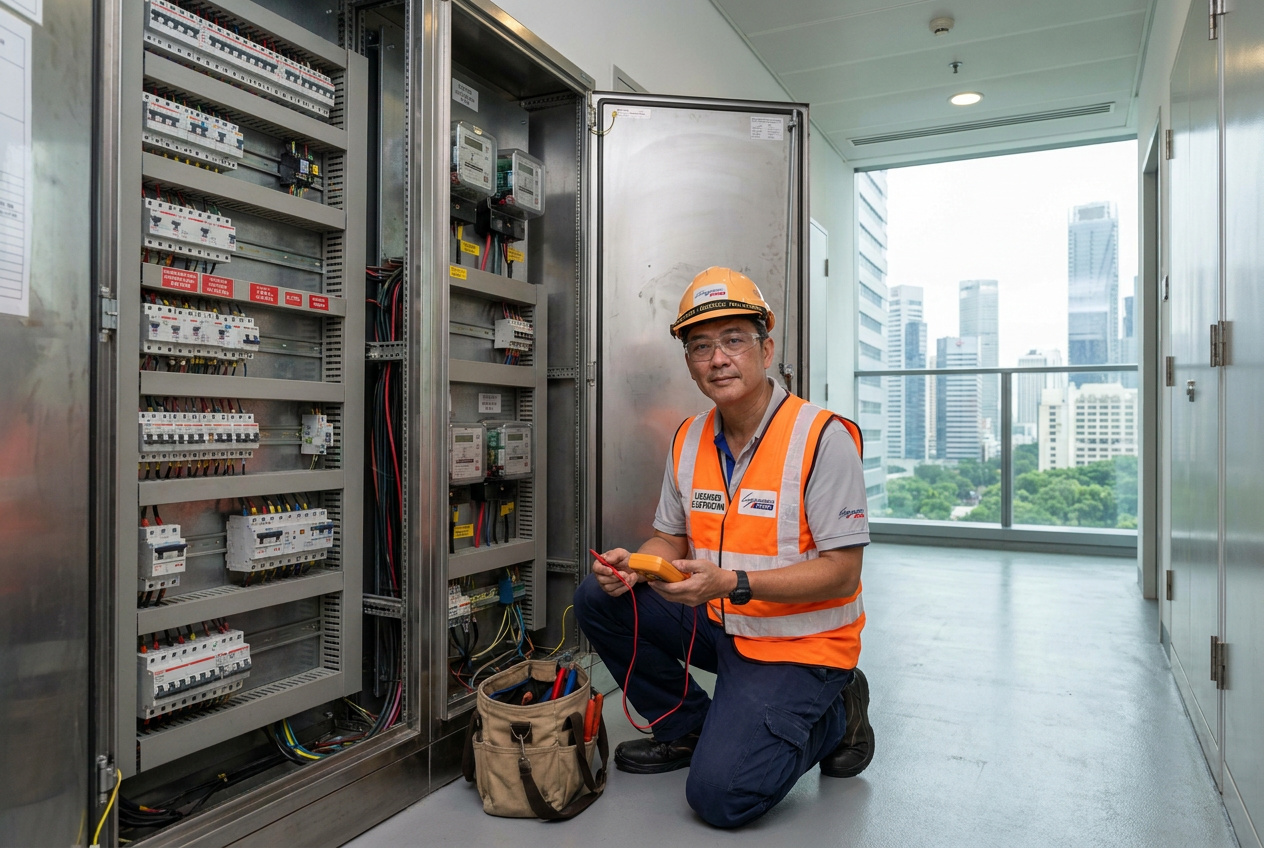
When you hire an electrician in Singapore, you will see grades on their licence: Grade 7, Grade 8, or Grade 9. These are not random numbers. They set out exactly what each Licensed Electrical Worker (LEW) is allowed to do under Singapore's Electricity Act.
Getting the grade right matters. Hiring too low a grade can leave you with non-compliant work, safety risks, and problems with the authorities. This guide explains the three grades, what each can do, and how to confirm you are hiring the right professional.
What LEW grades are
The Energy Market Authority (EMA) licenses electrical workers under three grades, each with its own qualifications and permitted scope.
- Grade 7 (L7): Licensed Electrician, up to 45kVA and 1,000V
- Grade 8 (L8): Licensed Electrical Technician, up to 500kVA and 1,000V
- Grade 9 (L9): Licensed Electrical Engineer, up to 400,000V (depending on licence)
Each higher number means broader scope and higher qualifications. A Grade 9 Electrical Engineer has the widest authority, while Grade 7 Electricians work within set load and voltage limits.
Most home jobs sit within Grade 7 or Grade 8 scope. Large commercial and industrial projects usually need Grade 8 or Grade 9.
Grade 7 LEW: Licensed Electrician
Grade 7 is the foundation licence for electrical work in Singapore. These workers handle the bulk of residential installations.
Permitted scope:
- Design, install, repair, maintain, operate, inspect, and test electrical installations
- Installations up to 45kVA approved load
- Voltage of 1,000V and below
- Work on 45 to 500kVA installations under Grade 8 supervision
When you need Grade 7: most HDB renovations, adding power points, light installations, distribution board work within 45kVA, water heater connections, and standard residential maintenance.
Qualification pathways:
- NITEC certificate with 2 years' experience, or
- No qualifications with 10 years' experience, or
- 5 years' experience plus the EN032 preparatory course
Our HDB and residential LEW services include Grade 7 and Grade 8 LEWs for full residential coverage.
Grade 8 LEW: Licensed Electrical Technician
Grade 8 Electrical Technicians handle larger residential and commercial systems, with wider design authority.
Permitted scope:
- Install, repair, maintain, operate, inspect, and test installations up to 500kVA
- Design and submit plans for installations up to 150kVA
- Voltage of 1,000V and below (except Electric Discharge Lighting)
- Supervise Grade 7 Electricians on larger installations
When you need Grade 8: larger homes, commercial shop fit-outs, food courts, small factories, office buildings, and any installation above 45kVA.
Qualification pathways:
- Diploma in electrical power engineering with 2 years' experience, or
- Diploma with 1 year's experience plus the EN033 preparatory programme, or
- Licensed Electrician with 5 years' experience plus the EN033 preparatory programme
For our commercial and industrial LEW services, Grade 8 Technicians handle most commercial installations.
Grade 9 LEW: Licensed Electrical Engineer
Grade 9 is the highest level. These professionals work on high-voltage systems and hold full design authority.
Permitted scope:
- Full authority for installations within the licence voltage limit
- Voltage levels available: up to 1,000V, 22,000V, 66,000V, 230,000V, or 400,000V
- No kVA limit on operations
- Design, installation, repair, maintenance, operation, inspection, testing, and full responsibility
When you need Grade 9: large commercial buildings, industrial sites, substations, high-voltage distribution, infrastructure, and any work above 1,000V.
Qualification requirements:
- Registered Professional Engineer (PE) in electrical engineering
- At least 2 years' post-graduate experience in Singapore in electrical power engineering
Load and voltage at a glance
- Grade 7 Electrician: up to 45kVA, 1,000V. HDB flats, small residential.
- Grade 8 Technician: up to 500kVA (150kVA design), 1,000V. Food courts, small factories, commercial.
- Grade 9 Engineer: no kVA limit, up to 400kV. Large industrial, infrastructure.
How to verify your electrician's grade
Before hiring, check the grade through EMA's ELISE portal.
- Ask your electrician for their LEW licence number
- Open the ELISE public search at elise.ema.gov.sg/elise/public_searchforelectrical.jsp
- Confirm the grade suits your project
- Check the licence is current
ELISE shows the worker's name, licence class, grade number, validity period, and current status.
Red flags: reluctance to share the licence number, expired licences, a grade too low for the work, or no valid registration found.
Our emergency electrician services are staffed by verified LEWs whose credentials are available for inspection.
Choosing the right grade
Residential projects (HDB, condos):
- Standard HDB renovation: Grade 7 or 8
- Distribution board upgrades: Grade 7 (under 45kVA) or Grade 8
- Adding power points: Grade 7 or 8
- Light fitting installation: Grade 7 or 8
- Larger properties with high load: Grade 8
Commercial projects:
- Shop electrical fit-out: Grade 8
- Office electrical systems: Grade 8
- Large commercial buildings: Grade 8 or 9
- Industrial facilities: Grade 8 or 9
When in doubt, Grade 8 gives broader capability for most residential and commercial needs without supervision requirements.
On cost: higher grades may charge more, but hiring too low a grade can leave you with non-compliant work and expensive rectification. Invest in the right grade from the start.
Staying compliant
Singapore's Electricity Act requires all electrical installation work to be done by an appropriately graded LEW.
Legal requirements:
- All installation work needs a licensed LEW of the right grade
- The LEW must submit notifications and certifications to EMA
- Property owners are responsible for ensuring licensed workers do the job
- Both worker and owner face penalties for non-compliance (fines up to $10,000)
What needs a LEW: installing power points, switches, and lighting, modifying distribution boards, rewiring circuits, and any permanent electrical connection.
Certification you should receive:
- Completion certificate confirming the work meets standards
- Test results showing the installation passed safety tests
- Proof of EMA notification
These documents matter for HDB sales, MCST compliance, insurance claims, and future renovation permits. For our licensed electrical works, we ensure full compliance with complete documentation.
Frequently Asked Questions
Can a Grade 7 Electrician handle all residential work? Mostly, but with limits. Grade 7 scope covers installations up to 45kVA and 1,000V, which suits many HDB flats and smaller homes. On their own they can install, repair, and maintain power points and switches, fit lights, ceiling fans and doorbells, do basic DB work within 45kVA, and handle both single-phase and three-phase work within the load limits. You need Grade 8 instead when the load goes above 45kVA, common in larger condos, landed homes with several air conditioners, or homes with high demand. Grade 7 workers can work on 45 to 500kVA installations only under Grade 8 supervision.
What's the difference between Grade 8 and Grade 9? It comes down to voltage scope, design authority, and qualifications. Grade 8 Electrical Technicians work up to 1,000V, operate and maintain up to 500kVA, design and submit plans up to 150kVA, and need a diploma in electrical power engineering. They suit commercial spaces, small factories, and food courts. Grade 9 Electrical Engineers work up to 400,000V (depending on licence), carry no kVA limit, hold full design authority, and must be a registered Professional Engineer (PE). They are essential for large industry, substations, and high-voltage infrastructure. Most residential and small commercial work sits within Grade 8 scope.
How do I verify a grade before hiring? Use the EMA ELISE portal. Ask for the electrician's full name and licence number, then visit elise.ema.gov.sg/elise/public_searchforelectrical.jsp. Confirm the grade suits your project, the licence is current, and there are no suspensions. The system shows the name, licence class, grade number, validity dates, and status. Red flags: reluctance to share the number, expired licences, a grade too low for the work, or no registration found. Every LEW carries a photo licence card, so ask to see it before work begins.
What work doesn't need a LEW? Replacing bulbs, plugging in appliances, resetting tripped breakers, replacing blown fuses, basic cleaning of fixtures, and changing batteries in cordless devices. What does need a LEW: installing new power points or switches, fitting lights with permanent connections, any wiring change, hardwiring appliances such as water heaters, modifying the distribution board, and extending circuits. The test is simple: if the work means opening electrical enclosures, joining wires, or making permanent connections, it needs a LEW.
Can a higher-grade LEW supervise lower-grade workers to extend scope? Yes, within limits. Grade 7 Electricians can work on installations between 45kVA and 500kVA when a Grade 8 Electrical Technician supervises. What supervision cannot do: extend voltage limits (Grade 7 and 8 are both capped at 1,000V), bypass the qualifications needed for design work, or let a supervisor simply 'sign off' work without genuine oversight. Each LEW is personally accountable for work within their scope.
Which grade do I need for an HDB renovation? For most HDB flats, Grade 7 is enough, since loads sit under 45kVA. Grade 7 handles full rewiring, distribution board upgrades, power points, lighting, air conditioning connections, and water heater installations. Grade 8 comes in for larger HDB units with high demand, executive apartments approaching 45kVA, or commercial HDB units. Grade 9 is rarely needed for HDB, as residential work does not involve high-voltage systems.
What are the penalties for using an unqualified electrician? Legal: fines up to $10,000, penalties for both worker and owner, and possible imprisonment for serious breaches. Practical: the work cannot be EMA certified, the installation stays unregistered, you may struggle to sell, insurance claims may be rejected, MCST requirements go unmet, and you may need a complete reinstallation. Protect yourself by verifying credentials via ELISE, matching the grade to the job, requesting completion certificates, and keeping the documentation.
In summary
Knowing the LEW grades lets you hire the right professional, stay compliant, and keep everyone safe. Whether you need Grade 7 for standard home work, Grade 8 for larger commercial jobs, or Grade 9 for high-voltage systems, matching the grade to the work protects you from legal trouble and safety risks.
Always check the grade before work starts, make sure the scope fits your needs, and keep the certification for your property records. For professional work by verified LEWs, explore our licensed electrical works.