Singapore Electrical Standards: What Homeowners Should Understand
A plain-language guide to Singapore's electrical standards: what EMA regulates, what SS 638 requires, and what it all means for the wiring behind your walls.
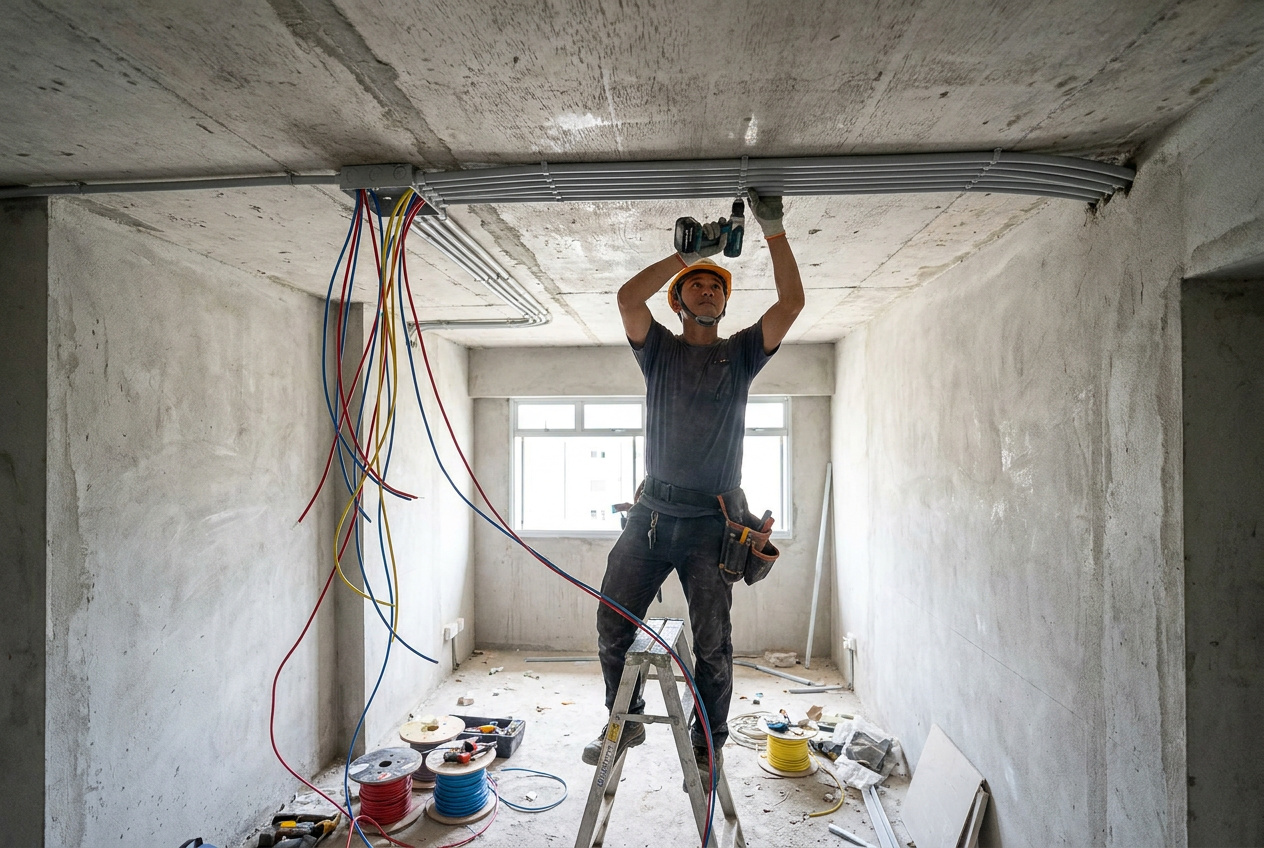
Most homeowners never think about electrical standards until a renovation, a property sale, or a fault forces the question. Yet these standards directly affect your safety, your insurance cover, and your property's value.
This guide puts Singapore's electrical regulations into plain language, so you know what applies to your home and why it matters.
EMA and the regulatory framework
The Energy Market Authority (EMA) is the government agency that regulates Singapore's electricity industry. For homeowners, its most relevant jobs are licensing electrical workers and enforcing the technical standards that apply to installations in every building, homes included.
The framework rests on a few pillars.
- The Electricity Act 2001. The primary legislation for electricity in Singapore. It sets the licensing requirements for electrical workers, the obligations of installation owners, and EMA's authority to enforce safety standards.
- The Licensed Electrical Worker (LEW) system. EMA licenses all electrical workers through a graded system. Different grades authorise different scopes, from basic domestic work to large commercial and industrial projects. Licensing makes sure anyone doing the work has proven competence.
- Technical standards. The technical rules are published as Singapore Standards by the Singapore Standards Council and Enterprise Singapore. The primary document is SS 638. EMA gives these standards legal force by adopting them through the Electricity (Electrical Installations) Regulations, so compliance is a legal requirement.
- Inspection and enforcement. EMA can inspect installations, require rectification of non-compliant work, and in serious cases order the supply disconnected. Penalties include fines and imprisonment.
The standards that affect your home
Several standards and codes govern residential installations. Here are the ones most relevant to you.
SS 638: Code of Practice for Electrical Installations
This is the core technical standard for all installations in Singapore. A modified adoption of BS 7671 (itself derived from IEC 60364) and adapted for local conditions, SS 638 covers:
- Wiring methods: which cable types are approved, how they must be installed, and the minimum cable sizes for different circuits.
- Circuit protection: requirements for MCBs (Miniature Circuit Breakers), RCCBs, and other protective devices.
- Earthing: how the installation must be connected to earth for shock protection.
- Testing: which tests must be done on a finished installation to confirm it is safe.
SS 145: Plugs, Socket-Outlets, and Accessories
This standard covers plugs, socket-outlets, multi-way adaptors, and domestic wall switches, rather than the appliances themselves. Appliance safety falls under the Consumer Protection (Safety Requirements) Regulations and the IEC 60335 series. Appliances sold here must carry the Safety Mark, which confirms they have been tested against the applicable requirements. Look for that mark when you buy electrical products.
CP 5 and SS 638
CP 5:1998 was the previous code of practice for electrical installations in buildings. It has been superseded and redesignated as SS 638:2018, now the current standard, though you may still see CP 5 mentioned in older paperwork. SS 638 covers building-specific requirements, including high-rise residential blocks like HDB and condominiums, lightning protection, emergency lighting, and the electrical needs of common areas.
HDB-specific requirements
HDB sets additional rules for flats, on top of the general standards. These include limits on certain modifications, permit requirements for specific work, and mandatory RCCB installation. If you live in an HDB flat, your electrician needs to know both the national standards and the HDB rules.
What the standards mean for your home
The documents are technical, but their practical effect is concrete.
- Your wiring must suit the load. Every circuit has a cable rated for a maximum current. Add appliances beyond that, and the cable overheats, which is a fire risk. The breaker should trip first, but correct cable sizing is the first line of defence.
- Earth leakage protection is mandatory. Your distribution board must include an RCCB (or the older ELCB on existing installations awaiting upgrade) that detects earth leakage and cuts power before it can cause a shock. This matters most in wet areas like kitchens and bathrooms.
- All metalwork must be earthed. Metal pipes, appliance casings, and other conductive parts must connect to earth so fault current has a safe path to ground rather than through a person.
- Circuits should be separated. Lighting and power belong on separate MCBs, so a fault on one does not knock out the other. High-power appliances such as water heaters, air conditioners, and ovens should each have a dedicated circuit.
- Testing is not optional. After any work, the installation must be tested for insulation resistance, earth continuity, and RCCB operation. A LEW who skips testing is not doing the job properly.
Compliance during a renovation
A renovation is where most homeowners meet these standards head on. Here is what compliance looks like in practice.
Before the work starts, your LEW should assess the existing installation, design the new layout, and check whether the distribution board has enough capacity for the additions. For HDB flats, your contractor should apply for any required permits first.
During the work, the LEW should use approved materials, install cables by the specified methods (in conduit, trunking, or as the standard permits), and keep all connections secure and accessible for future inspection.
After the work, the LEW tests the complete installation and provides a certificate confirming it meets the applicable standards. For HDB flats, the LEW may need to submit documentation to HDB as part of the renovation completion process.
Common renovation triggers for electrical standards:
- Adding power points: new circuits must be properly sized, protected, and connected to the distribution board.
- Kitchen upgrades: induction hobs and built-in ovens usually need a dedicated high-amperage circuit, often 20A or 32A depending on the appliance's rated load.
- Bathroom work: circuits serving wet areas have specific requirements for RCCB protection and IP (Ingress Protection) ratings.
- Smart home installation: new cabling for smart switches, automation, and network infrastructure must comply with the wiring standard.
- Full rewiring: an older flat being fully rewired must meet the current edition of SS 638, not the edition that applied when it was built.
How the standards are enforced
Enforcement works through several channels.
- LEW accountability. Licensed Electrical Workers are personally accountable for their work, and their licence can be suspended or revoked for non-compliance. That is a strong incentive to follow the rules.
- Installation inspections. EMA can inspect any installation and does so regularly for commercial and industrial premises. Residential inspections are less routine but can be triggered by complaints, incidents, or property transactions.
- Property transactions. When a property changes hands, buyers or their agents often commission an inspection, and non-compliant work can affect the deal or reduce value.
- Insurance. Home policies typically require the installation to meet the applicable standards. If a fire or incident traces back to non-compliant work, the insurer may deny the claim.
- HDB enforcement. HDB has its own mechanisms, including inspections during and after renovations, and non-compliant work must be fixed before a flat counts as renovation-complete.
What you can and cannot do yourself
Knowing the boundary keeps you safe and compliant.
Safe to do yourself:
- Replace a blown fuse in a Type G plug (the fuse inside the plug, not the breaker).
- Reset a tripped MCB or RCCB once you have found and removed the cause.
- Replace a lamp or bulb with the switch off.
- Plug in and unplug appliances.
- Test your RCCB monthly using the test button.
- Map and label your circuit breakers.
Frequently asked questions
What are Singapore's main electrical safety standards?
The framework rests on several key standards and regulations. The primary legislation is the Electricity Act 2001, which governs all use of electricity. EMA regulates the industry and licenses electrical workers, while the technical installation standards are published under the Singapore Standards framework by the Singapore Standards Council and Enterprise Singapore, and adopted into law through the Electricity (Electrical Installations) Regulations. The most important technical standard for homeowners is SS 638: Code of Practice for Electrical Installations, Singapore's local adaptation of BS 7671 (derived from IEC 60364), covering wiring methods, cable sizing, earthing, circuit protection, and testing. For homes, SS 638 sets minimum cable sizes, RCCB protection for shock prevention, proper earthing of metalwork, separation of lighting and power circuits, and correct distribution board installation. SS 145 covers plugs, socket-outlets, and related accessories, and HDB adds its own requirements for flats. These standards are actively enforced, which is part of why Singapore has such a strong safety record.
Does EMA regulate residential electrical work?
Yes. EMA regulates electrical installation work across Singapore, homes included. It licenses all electrical workers through a graded system, adopts and enforces the technical standards (SS 638 and related codes, published by the Singapore Standards Council and Enterprise Singapore), and holds enforcement powers, including requiring rectification of non-compliant work or ordering supply disconnection. In practice, that means all installation or modification work must be done by an EMA-licensed worker. Using unlicensed workers risks your safety, voids your compliance status, and can create problems during a sale or an insurance claim. Our licensed electrical works service ensures full EMA compliance.
What happens if my home fails an electrical inspection?
It depends on the severity. Minor non-compliance results in a defect list to be fixed within a set timeframe. Serious defects, such as missing earth leakage protection or exposed live conductors, need immediate attention and may mean a circuit is isolated until it is repaired. For HDB flats, non-compliance can also delay renovation completion. The homeowner is responsible for putting things right, and if the work was done by an unlicensed person, having a licensed worker inspect and rectify it is strongly recommended.
Are Singapore's standards the same as the UK's?
They share a common heritage. Both countries use Type G plugs, a 230V supply, and similar safety thinking. But Singapore has its own standard, SS 638, a modified adoption of BS 7671, both derived from IEC 60364. Key differences include cable sizing adjusted for tropical temperatures, earthing arrangements that may vary with the local supply configuration and building type, and the requirement under the Electricity (Electrical Installations) Regulations for installation work to be done by an EMA-licensed worker, whereas the UK permits some domestic DIY under Part P. Your UK appliances work directly here, as covered in our Singapore plug type guide.
How do I make sure my renovation meets the standards?
Three things: qualified people, proper planning, and verification. Engage a Licensed Electrical Worker for all electrical work. In planning, define the scope clearly, including power point locations, dedicated circuits for high-power appliances, distribution board capacity, and RCCB needs. After completion, the LEW should test insulation resistance, earth continuity, and RCCB trip times, then provide documentation. For HDB flats, some work needs permits. Our electrical installation services cover the full scope, from planning through certification.
Standards that keep you safe
Singapore's electrical standards are the reason you can switch on a light, boil a kettle, or run an air conditioner without worrying about the wiring behind the wall. They are decades of engineering knowledge distilled into practical requirements.
You do not need to read SS 638 cover to cover. But knowing these standards exist, understanding what they ask at a high level, and insisting any work on your property meets them puts you in a much stronger position.
For any electrical work in your home, from a single power point to a full rewiring, our licensed electrical works service ensures compliance with every applicable Singapore standard.