Singapore Plug Type Guide: Type G and What Visitors Need to Know
Singapore uses the three-pin Type G plug on a 230V, 50Hz supply. Here is what visitors and new arrivals need to know about adapters, voltage, and where to buy.
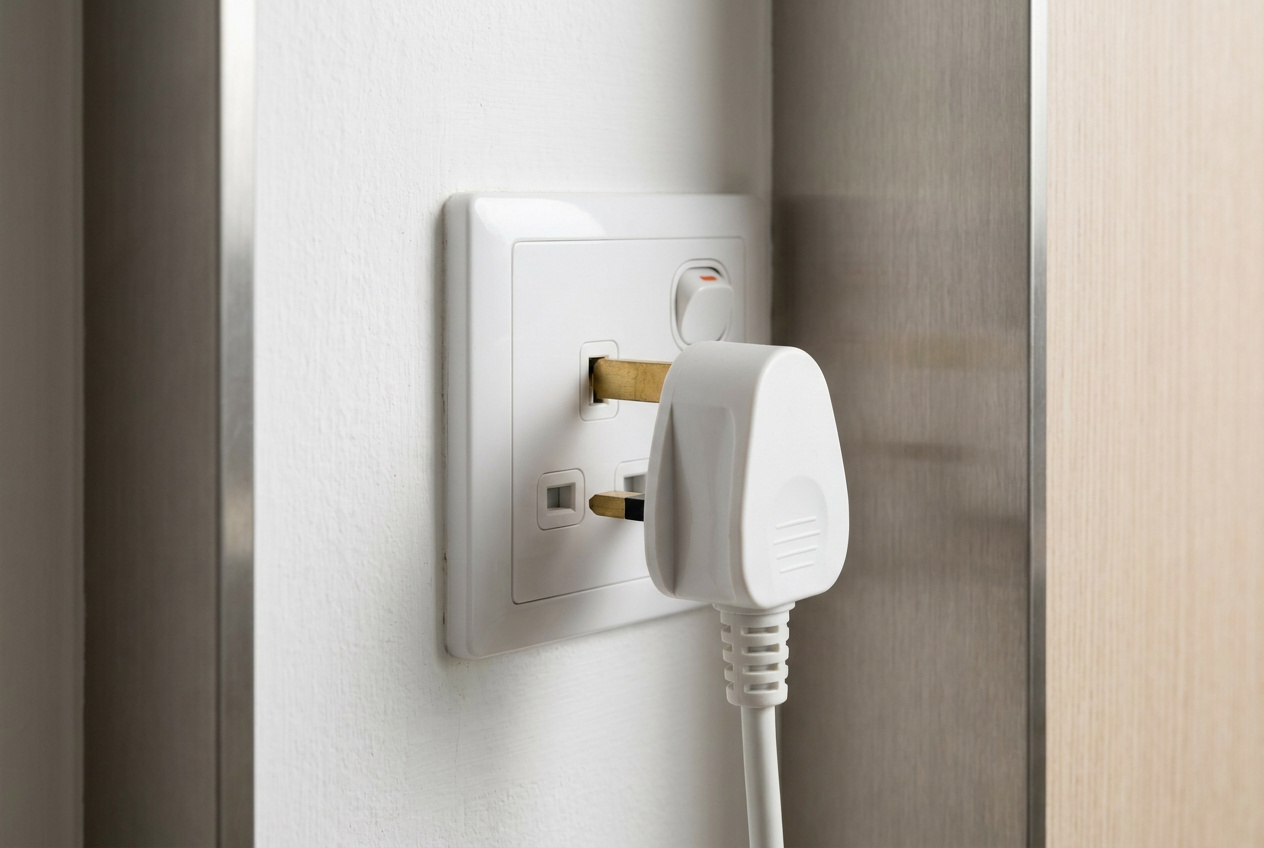
Packing for Singapore and wondering if your phone charger will work here? Or maybe you have just moved in and your flat is full of appliances that do not fit the sockets. Either way, understanding Singapore's plug type saves you the midnight scramble for an adapter.
Singapore uses the Type G plug, the same three-rectangular-pin design used in the United Kingdom. It is one of the safest plug standards in the world, and once you know how it works, staying connected here is simple.
What is a Type G plug?
The Type G plug (BS 1363) has three rectangular pins set in a triangle. The top pin is earth; the two below are live and neutral. Every plug sold in Singapore must follow this standard.
A few features make the Type G design particularly safe.
- Built-in fuse: unlike most plug types worldwide, every Type G plug holds an internal fuse. It protects the individual appliance and its flex cable, blowing before the wiring overheats if the appliance draws excessive current. Standard ratings are 3A (for devices under 700W like lamps and phone chargers) and 13A (for higher-power devices like kettles and heaters).
- Safety shutters: Singapore sockets have spring-loaded shutters over the live and neutral holes. They only open when the longer earth pin goes in first, which stops children pushing objects into the socket.
- Insulated pins: the live and neutral pins are partly sleeved in insulation near the base, so even a partly withdrawn plug leaves no exposed metal to touch by accident.
- Earth connection: the earth pin gives fault current a safe path to ground rather than through a person. It works alongside the RCCB in your distribution board to provide shock protection.
Singapore plug versus other countries
Singapore shares the Type G standard with several countries, but most of the world uses different socket types. Here is how the common ones compare and whether they fit a Singapore socket.
- Type G (Singapore, UK, Malaysia, Hong Kong, UAE): 3 rectangular pins, 230V, 50Hz. Fits Singapore sockets directly.
- Type C (most of Europe, South America): 2 round pins, 230V, 50Hz. Needs an adapter.
- Type F (Germany, France, Spain, Indonesia): 2 round pins plus earth clips, 230V, 50Hz. Needs an adapter.
- Type A (USA, Canada, Japan, Taiwan): 2 flat pins, 120V, 60Hz. Needs an adapter and a voltage check.
- Type B (USA, Canada): 2 flat pins plus earth, 120V, 60Hz. Needs an adapter and a voltage check.
- Type I (Australia, China, New Zealand): 2 angled pins plus earth, 230V, 50Hz. Needs an adapter.
Using adapters for foreign devices
A plug adapter changes the physical shape of the plug so it fits a different socket. It does not change the voltage or frequency of the supply.
For most visitors and expats, a plug adapter is all you need, because the vast majority of personal electronics today run on any voltage between 100V and 240V. Check the fine print on your charger or power supply. If it reads "Input: 100-240V, 50/60Hz", the device is dual-voltage and only needs an adapter.
- Usually just an adapter: laptop chargers, phone and tablet chargers, camera battery chargers, electric toothbrush chargers, portable speakers, e-reader chargers.
- May need a voltage converter if coming from a 120V country: hair dryers and straighteners (unless dual-voltage), curling irons, some electric kettles, small kitchen appliances (blenders, coffee makers), and older electronics without switching power supplies.
Adapters versus voltage converters
These two solve different problems, and mixing them up is a common, sometimes costly, mistake.
- Plug adapter (S$5 to S$30): changes the plug shape only. Small, light, no electronics inside. Use it when your device already supports 230V (check the label).
- Voltage converter or transformer (S$30 to S$150 and up): changes the voltage from 230V down to 120V, or the reverse. Heavier, with a transformer or electronics inside. Use it when your device only supports 120V, and make sure it is rated for the wattage you are powering.
Where to buy adapters in Singapore
Adapters are easy to find across the island. Here are the handiest options.
- At the airport: Changi has electronics shops and convenience stores in every terminal, including the transit areas. Prices run slightly higher than in town, but the range is good and it is useful if you need one the moment you land.
- Convenience stores: 7-Eleven and Cheers outlets carry basic travel adapters, usually simple single-type ones (Type C to Type G, or Type A to Type G) around S$8 to S$15.
- Electronics shops: Sim Lim Square on Rochor Canal Road has multiple shops with large selections, including multi-country universal adapters and better branded options. Challenger and Courts in major malls stock them too.
- Hardware shops: neighbourhood hardware shops often price adapters below electronics retailers. Look along the older shophouse rows in residential areas.
- Online: Shopee, Lazada, and Amazon.sg offer the widest range and lowest prices, but delivery takes 1 to 3 days, so good for stocking up rather than tonight.
Setting up a home with mixed plug types
If you are an expat setting up a Singapore home with appliances from different countries, you have better options than a drawer full of adapters.
- Replace the plugs: for appliances you use daily, having an electrician fit a proper Type G plug is the cleanest fix. It removes the adapter entirely and gives a secure connection.
- Install additional socket types: if you have several devices from one country, an electrician can install sockets of that type alongside your standard Singapore outlets. This is common for European expats bringing kitchen appliances from home.
- Use quality power strips with a single adapter: plug a good adapter into the wall, connect a power strip from your home country, and run your devices off the strip. This works well for a desk full of chargers.
What type of plug does Singapore use?
Singapore uses the Type G plug, also known as British Standard BS 1363. It has three rectangular pins in a triangle: a larger earth pin on top, with smaller live and neutral pins below. It is the same plug used in the United Kingdom, Malaysia, Hong Kong, and several other places. Every standard socket in Singapore is built for this three-pin layout.
Type G runs on 230V at 50Hz, the national standard. Every socket also has a built-in safety shutter that only opens when the earth pin goes in first, preventing accidental contact with live terminals.
Arriving from a country with a different plug, such as the two-round-pin Type C used across Europe or the two-flat-pin Type A used in the United States, means you will need a travel adapter. The good news: most modern electronics like laptops, phone chargers, and cameras are dual-voltage (100V to 240V), so you usually need only a plug adapter, not a voltage converter.
Can I use European plugs in Singapore?
European plugs (Type C, two round pins) do not fit Singapore's Type G sockets directly, so you need a travel adapter to change the plug shape. The voltage, though, matches: Europe runs 230V at 50Hz, the same as Singapore, so European appliances work at the correct voltage once you have the right adapter.
For short stays, a simple Type C to Type G adapter is enough, available at Changi, convenience stores, and hardware shops. For longer stays or several European appliances, consider a power strip with a single adapter at the wall end.
One thing to watch: some European countries use plugs that differ from the standard Type C. Italian Type L plugs have three round pins in a row, and Swiss Type J plugs have three round pins in a triangle. Standard European adapters may not fit these, so check your specific plug before buying. For permanent installations, an electrician can fit European-style sockets alongside your Singapore outlets.
Is the Singapore plug the same as the UK plug?
Yes. Singapore and the United Kingdom use the same plug type: Type G (BS 1363). The three rectangular pins, the fuse inside the plug, and the socket design are identical. Travelling between Singapore and the UK, you need no adapter.
This shared standard exists because Singapore's electrical system was developed during the British colonial period and has kept the BS 1363 standard since. The Type G plug is widely regarded as one of the safest in the world, thanks to its built-in fuse, safety shutters, and insulated pins.
There is one subtle difference worth noting. Some older UK appliances may be rated for 240V, while Singapore's nominal supply is 230V. In practice the gap is negligible, as most appliances are designed to tolerate anywhere from 220V to 240V without trouble.
Do I need a power adapter for Singapore?
It depends on your home country. Arriving from the United Kingdom, Malaysia, Hong Kong, or anywhere else using Type G (three rectangular pins), you need no adapter.
From anywhere else, you will need a plug adapter. The common cases are visitors from Europe (Type C or Type F, two round pins), the United States and Canada (Type A or Type B, two or three flat pins), Australia and China (Type I, two angled pins), and Japan (Type A, two flat pins).
You can buy adapters at Changi, 7-Eleven and Cheers, electronics shops like Challenger, or neighbourhood hardware shops. Choose one rated for at least 13A and avoid very cheap unbranded options. Good adapters from established brands cost S$10 to S$30 and last for years.
Can I use a US plug in Singapore with an adapter?
Yes, but mind the voltage. The United States uses 120V at 60Hz, while Singapore uses 230V at 50Hz.
Most modern electronics are dual-voltage (labelled 100V to 240V on the charger) and need only a plug adapter. That covers laptop chargers, phone chargers, and camera chargers. But some US appliances are 120V only, including hair dryers, curling irons, and small kitchen appliances. Plugging a 120V device into Singapore's 230V supply will damage it and can be a fire hazard.
Always check the voltage label on the device or its power supply before plugging in. If it shows 120V only, you need a step-down voltage converter, not just a plug adapter.
Are universal adapters safe?
Universal travel adapters vary a lot in quality. A well-made one from a reputable brand is perfectly safe for normal use; a cheap, poorly made one can be a hazard.
Look for safety certifications (BS 1363 approval, CE marking, or Singapore's Safety Mark), solid construction with firm pin contact, and built-in surge protection for sensitive electronics. Avoid adapters with no brand markings, thin or bendy pins, or designs that leave all the plug holes exposed at once.
For Singapore specifically, a dedicated adapter for your plug type (Type C to Type G, or Type A to Type G) often gives a more secure fit than a universal model. Staying long-term, replacing your appliance plugs with proper Type G plugs is the most reliable approach.
Stay connected
Singapore's Type G plug standard is straightforward once you know what to expect. For a short visit, grab an adapter at the airport or a convenience store. For a longer stay, consider replacing plugs or installing extra socket types.
If you need help with any socket or outlet work in your Singapore home, our electrical installation services cover everything from adding new power points to installing specialised sockets for imported appliances.