When You Need a Licensed Electrician in Singapore
Not every electrical job needs a LEW. This guide shows exactly when the law requires one, when a general electrician will do, and how to decide with confidence.
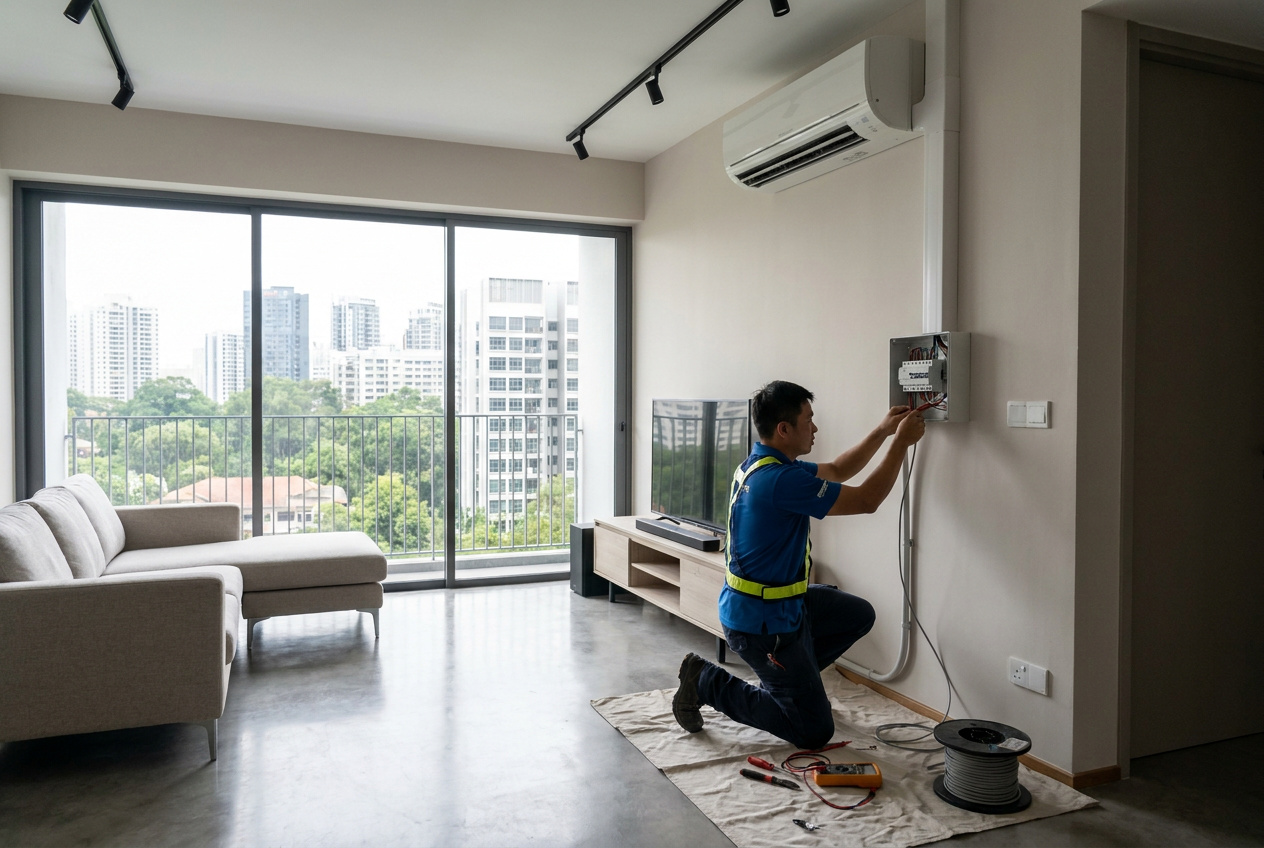
Under Singapore's Electricity Act, certain electrical work can only be done by Licensed Electrical Workers (LEWs) registered with the Energy Market Authority. Breaking that rule can bring fines up to S$10,000 and can void your property insurance entirely.
But not every job falls under these rules. The distinction matters. Installing a new circuit for your air conditioner needs a LEW; swapping a faulty light switch for an identical one does not. Knowing where your project sits protects you legally and financially.
What a Licensed Electrical Worker is
A Licensed Electrical Worker holds an official licence from the EMA to carry out regulated electrical work. That credential takes formal qualifications, practical experience, and ongoing compliance.
LEWs come in three grades:
- Grade 7 (L7) Licensed Electrician: for homes and commercial premises where the maximum load stays within 45kVA and 1,000V. Covers most HDB flats and standard condos.
- Grade 8 (L8) Licensed Electrical Technician: for installations up to 500kVA (design up to 150kVA) at 1,000V. Suits larger commercial and light industrial work.
- Grade 9 (L9) Licensed Electrical Engineer: for all installation work including high-voltage systems up to 400kV. Needed for large industry and infrastructure.
For most homeowners, a Grade 7 or Grade 8 LEW is enough. The 45kVA threshold for Grade 7 sits well above what most homes use; even a large condo unit rarely exceeds it.
Not every skilled electrician is a LEW. Many have technical training but no EMA licence. They can legally do certain tasks but are barred from regulated installation work.
When a LEW is mandatory
Any work that changes fixed wiring (adding, altering, or extending circuits, or replacing components beyond a like-for-like swap) needs a LEW under the Electricity Act. The rule targets work that changes your system's capacity, safety, or configuration, not routine maintenance or like-for-like swaps of items such as lamps, fuses, or identical fittings.
New installations
Any new installation needs a LEW:
- New circuits: dedicated circuits for air conditioners, water heaters, or kitchen appliances
- New power points: extra outlets beyond like-for-like swaps
- Fixed appliance connections: hardwiring water heaters, ovens, or air conditioners
Distribution board work
Your distribution board (DB) is the heart of your electrical system, so any work on it is regulated: replacing or upgrading the board, adding circuit breakers (MCBs or RCCBs), or fitting safety devices such as ELCBs or RCDs. For a closer look at what sits inside the panel, see our guide on understanding your HDB circuit breaker box.
Even adding a single breaker needs a LEW. The board controls how electricity flows through your whole property, and getting it wrong creates hazards that stay hidden until something goes badly wrong.
Rewiring
Any rewiring, partial or complete, needs a LEW:
- Full rewiring during a major renovation
- Partial rewiring in specific rooms or circuits
- Circuit extensions to new locations
- Upgrading cable capacity for higher loads
Major appliance installations
Water heaters, built-in ovens, air conditioning, and EV chargers usually need dedicated circuits with proper protection, which falls under LEW requirements. For these, our licensed electrical works service keeps you fully compliant with EMA regulations.
HDB and MCST requirements
- HDB properties: any work needing HDB approval must be done by a LEW. HDB will not process applications without proper credentials.
- Condo and MCST properties: management corporations usually require LEW credentials for work affecting building systems. Check your MCST guidelines before you start.
When a general electrician is fine
Plenty of common tasks fall outside the rules, so you can use a qualified electrician without LEW certification.
Like-for-like replacements
Replacing existing fixtures without changing the system does not need a LEW:
- Swapping ceiling lights for similar types
- Replacing damaged switches and power points with equivalent models
- Fitting a new ceiling fan using existing wiring
The key phrase is 'like-for-like'. If you are not changing the configuration or adding capacity, a general electrician can handle it.
Minor repairs
Routine repairs usually do not need LEW credentials:
- Fixing loose connections in switches or outlets
- Replacing damaged components
- Troubleshooting outlets that have stopped working
Our electrical troubleshooting services handle these efficiently. A LEW is not required unless the diagnosis reveals that circuit changes are needed.
Adding accessories
Fitting accessories that need no new circuits:
- LED strips or under-cabinet lighting on existing circuits
- Smart switches and home automation parts
- Low-voltage systems such as doorbells or intercoms
When to choose a LEW anyway
Even when it is not legally required, a LEW adds value for:
- Insurance claims that need official verification
- Property sales where documentation adds value
- Complex diagnostics that need real expertise
- Jobs that might grow into larger work
Risks of using unlicensed electricians
Using an unlicensed electrician for regulated work is not just cutting corners. It is illegal, with serious consequences.
Legal penalties
- Fines up to S$10,000 and/or 12 months in prison per offence under the Electricity Act
- Extra penalties for owners who knowingly hire unlicensed workers
- Prosecution under the Electricity Act for serious breaches
Insurance
Damage or fire from unlicensed work typically voids your cover. If a fault causes damage and investigators find unlicensed work, your insurer can deny the claim entirely.
Consider this: unlicensed work on your distribution board sparks a fire with S$50,000 in damage. When investigators find the improper installation, the whole claim is rejected.
Safety hazards
- Fires from poor wiring or inadequate circuit protection
- Electrocution from bad earthing or unsafe connections
- Damage to expensive appliances
- Long-term failures that surface months or years later
HDB and MCST complications
HDB may inspect a property and require unauthorised work to be put right. MCSTs can impose fines or take legal action. And when you sell, unlicensed work found during inspection can derail the deal.
A quick decision framework
Step 1: Identify the scope. Answer yes to any of these and you need a LEW:
- Installing new circuits or power points?
- Modifying, upgrading, or replacing your distribution board?
- Rewiring or extending circuits?
- Installing major appliances that need dedicated circuits?
- Work that needs HDB approval or MCST notification?
Step 2: Assess the system changes. If you answered no above, ask:
- Are you replacing existing fixtures with equivalent models?
- Is this routine repair or maintenance?
- Are you adding accessories on existing circuits?
If yes to these, a general electrician can probably handle it. When in doubt, choose a LEW; the credentials give you legal protection and peace of mind.
Step 3: Verify credentials.
- Ask for their LEW licence number
- Verify it with EMA's registry
- Confirm the right grade (L7, L8, or L9)
- Check the licence is valid
Our HDB and residential LEW services include full credential verification and regulatory compliance.
Common scenarios
- Replacing a ceiling light: like-for-like? General electrician. Adding new circuits? LEW required.
- Installing a water heater: same-model replacement? A general electrician may suffice. New installation? LEW required.
- Renovation work: cosmetic changes to switches or outlets? General electrician. Moving power points or adding circuits? LEW required.
Finding and verifying a LEW
Checking credentials. The Energy Market Authority keeps a public registry. Ask for the LEW licence number, verify it on EMA's portal, and check expiry dates. Genuine electricians welcome the check.
Questions to ask:
- What's your LEW licence number and grade?
- Does this work need a LEW, or can a general electrician handle it?
- Will you provide proper documentation on completion?
Red flags. Be cautious if an electrician refuses to share LEW credentials, claims a LEW isn't needed for obviously regulated work, offers suspiciously low prices, or discourages proper permits or documentation.
Frequently Asked Questions
Can I do electrical work myself without a licence? Singapore allows homeowners very limited work: replacing bulbs, plugging in appliances, and similar tasks that do not involve opening electrical installations or changing wiring. Anything involving wiring changes, circuit work, or distribution boards needs proper qualifications. For regulated work under the Electricity Act, you must use a LEW. Most homeowners lack the knowledge and tools to work safely, and faults can cause fires, electrocution, and voided insurance. For HDB flats the rules are stricter still.
What happens if I hire an unlicensed electrician for LEW work? Both you and the electrician face penalties under the Electricity Act: fines up to S$10,000 and/or 12 months in prison per offence, plus extra penalties for owners. Insurance is just as serious; most policies require qualified professionals, and unlicensed work that causes damage can mean denied claims running into tens of thousands. For HDB properties, HDB can demand immediate rectification and impose penalties. If you have already hired an unlicensed electrician, have the work inspected and certified by a proper LEW.
How much more does a licensed electrician cost? LEW services generally cost more than unlicensed alternatives, though prices vary a lot by scope and complexity. But you are not buying the same thing. The premium covers regulatory compliance, insurance, official documentation, and legal protection. Weigh that against the risks: insurance denial for major fire damage, fines under the Electricity Act, and paying twice to correct bad work. The difference is usually modest next to the potential losses.
Do I need a LEW for HDB versus private property? If the work is regulated under the Electricity Act, it needs a LEW whatever the property type. HDB adds requirements: any work needing HDB approval automatically needs a LEW, and HDB will not process applications without proper credentials. That covers new circuits, DB changes, rewiring, and major appliance installations. For private condos, it depends on MCST guidelines, and most require LEW credentials for work affecting building systems. For HDB, the safe assumption is that you need a LEW unless you are sure the work is minor.
Can a licensed electrician refuse to take over unlicensed work? Yes, and LEWs often do, for good professional and legal reasons. When unlicensed electricians have been involved, there is no guarantee proper standards were followed. A LEW taking over assumes responsibility for verifying everything done before, and may find substandard work needing a complete redo. LEWs stake their credentials on quality, so taking responsibility for partly finished unlicensed work puts their licence at risk, and most professional liability insurance does not cover problems from others' unlicensed work. The lesson: start with a LEW from the beginning.
What documentation should I receive after LEW work? Your LEW should provide a Certificate of Compliance (CoC) confirming the work meets EMA regulations, copies of approved permit applications and completion notifications, detailed work descriptions including circuit diagrams, test results and inspection reports, and warranty information. For HDB, add HDB approval documents and completion notifications. Keep these indefinitely for sales, insurance claims, and future work. If your electrician does not offer documentation, request it before final payment; reluctance is a red flag.
How long does it take to become a LEW? Typically several years, though EMA does not publish a fixed duration. The pathway combines recognised academic qualifications with relevant practical experience, submitted via EMA's e-Licensing portal with supporting testimonials, and applicants may also sit an interview or assessment. Grade 7 (L7) requires an ITE Certificate plus relevant experience for installations up to 45kVA and 1,000V. Grade 8 (L8) requires a Diploma in Electrical Engineering plus relevant experience for installations up to 500kVA. Grade 9 (L9) requires Professional Engineer registration for high-voltage work. Durations vary by each applicant's route and on-the-job experience, and LEWs must keep their credentials current through periodic renewal and continuing development.
Making the right choice
For legally regulated work (new circuits, distribution board changes, rewiring, major appliance installations) a LEW is not optional. It is the law.
For work outside the rules (like-for-like swaps, minor repairs, routine maintenance) a general electrician can handle it well.
The framework is simple: if you are changing your system's capacity or installing permanent fixtures that need dedicated power, you need a LEW. If you are maintaining or replacing existing parts without changing the system, a general electrician may suffice.
Electrical work done right protects your property, your family, and your investment. LEW credentials exist precisely to ensure that protection. Learn more about our licensed electrical works for compliant, professional installations that meet every regulatory requirement.